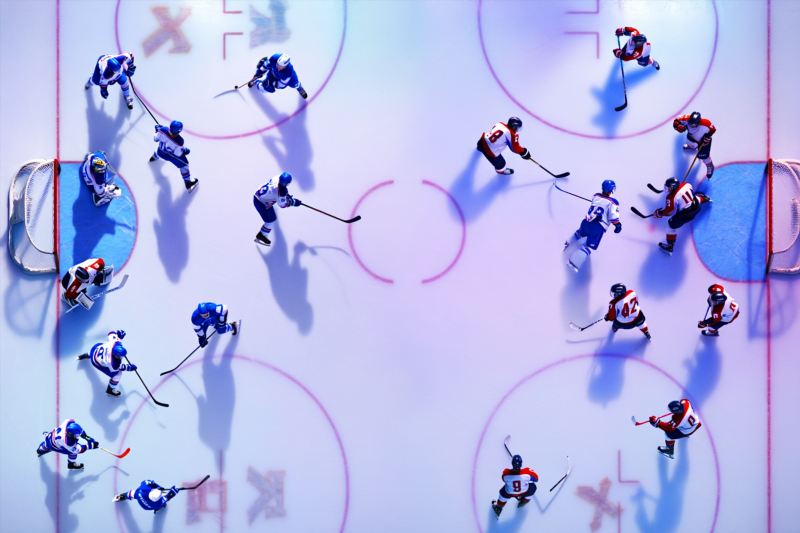
In the fast-paced world of hockey analytics, understanding the nuances of offensive strategies is crucial for gaining a competitive edge. IceAscend Analytics, a premium hockey intelligence platform, offers advanced match analysis, player performance insights, tactical breakdowns, and data-driven game predictions across leagues like the NHL, AHL, KHL, international tournaments, playoffs, and emerging leagues. Among the myriad of analytical tools provided, Rational XG (Expected Goals) maps stand out as essential for visualizing offensive intent and success potential.
This article delves into the core differences between rush and cycle offense charts, focusing on separate XG maps. Grasping these concepts enhances strategic decision-making, helps identify weaknesses in opponents’ defenses, and fortifies your team’s attacking blueprint—whether you’re coaching at the professional level or analyzing for fantasy or betting purposes.
Understanding Offense Building in Hockey
Before exploring the maps, it’s essential to understand the two fundamental offensive approaches:
- Rush Offense: A fast-paced, direct attack aimed at creating scoring chances through quick zone entries and immediate shot opportunities.
- Cycle Offense: A controlled, patient build-up where players circulate the puck along the boards, creating congestion, misdirection, and open shooting lanes through sustained puck possession.
Each approach has distinct tactical features, risk profiles, and success probabilities, which are visually represented in separate XG maps.
What Are Separate XG Maps?
XG Maps (Expected Goals Maps) are visual tools that encode the probability of scoring from specific locations on the ice, based on historical data. When analyzing offenses, separate XG maps for rush and cycle facilitate understanding where each strategy tends to generate quality scoring chances.
Why separate maps matter:
- Highlight the unique spatial patterns of each offense type.
- Reveal high-percentage zones for quick strikes versus sustained pressure.
- Offer insights into offensive efficiency from different tactics, assisting in game planning and adjustments.
Key Differences Between Rush and Cycle XG Maps
| Feature | Rush Offense XG Map | Cycle Offense XG Map |
| Location Focus | Predominantly high-XG zones near the net, especially on quick break-ins or rapid entries. | Higher XG in the front of the net and along the crease, resulting from sustained puck control and cycling. |
| Shot Types | Snap shots, quick wristers, often from the blue line or the rush entry. | Rebounds, tip-ins, and second-chance opportunities generated from sustained pressure. |
| Spatial Patterns | Concentrated near the crease or in areas reachable via fast transition. | More spread out along the perimeter with concentration along thecrease and crowded front. |
| Temporal Characteristics | Fast, immediate scoring chances, often from quick turnovers or breakaways. | Longer possession sequences, allowing the offense to set up and maneuver before shooting. |
| Risk and Reward | High reward but also high risk; quick entries can be risky but yield immediate chances. | Lower risk but requires patience; more controlled, less prone to turnovers. |
Strategic Implications of Each Map
Understanding these maps equips coaches, analysts, and players with the tools to tailor their tactics:
Rush-Focused Strategies
- Ideal when: Your team possesses fast skaters and skilled transition players.
- Benefits: Quick goal creation, exploiting turnovers, catching opponents off-guard.
- Defense Counter: Pressing, collapsing quickly, or forcing turnovers to neutralize rush threats.
Cycle-Focused Strategies
- Ideal when: Your team boasts strong puck control, size, and tactical awareness.
- Benefits: Gradual building, minimizing turnovers, drawing the opponent out of position.
- Defense Counter: Aggressive forechecking and disrupting passing lanes to break the cycle.
How to Use These Maps for Better Game Strategy
Step 1: Analyze Your Team’s Offense Data
- Review your team’s rush and cycle XG maps.
- Identify strengths—areas where your team generates high-quality chances.
- Pinpoint weaknesses—zones or tactics that yield lower expected goals.
Step 2: Study Opponents’ Defensive Maps
- Understand where opponents are vulnerable against each offense type.
- Adjust your attack accordingly—favoring rush or cycle based on opponent tendencies.
Step 3: Tailor In-Game Adjustments
- If your rush game is lukewarm, incorporate more cycle plays to create high-percentage shots.
- When facing aggressive opponents, prefer quick strikes to capitalize on turnovers.
Step 4: Training Focus
- Use data-driven insights to design drills that improve execution in preferred zones.
- Emphasize tactics that maximize high-XG areas specific to your offensive style.
Common Questions about Rush vs Cycle Offense Maps
Why should I care about separate XG maps for rush and cycle?
Because each strategy produces different spatial and probabilistic patterns. Separate maps enable precise adjustments and targeted training, leading to more successful offensive executions.
Can a team effectively combine rush and cycle strategies?
Absolutely. The most versatile teams seamlessly blend both approaches, adapting dynamically based on game flow and opponent weaknesses. Analyzing separate maps helps identify when to switch tactics for maximum effect.
How does IceAscend’s data improve my offense?
Our platform aggregates vast match data, transforming each game into a structured model with speed, decisions, and probabilities. This allows for nuanced analysis of rush versus cycle effectiveness, informing smarter, data-backed strategy development.
Differentiating between rush and cycle offense via separate XG maps unlocks a deeper understanding of your team’s offensive dynamics and opponent vulnerabilities. By leveraging these visual tools via IceAscend Analytics, coaches and analysts can craft targeted approaches that maximize scoring chances while minimizing risks. Whether you’re executing fast breaks or patient build-ups, mastering these insights primes your team for success on the ice.
Transform your game analytics today—embrace the power of technology, refine your strategies, and elevate your team’s performance.
Take Action
Start your journey into advanced hockey analytics with IceAscend! Sign up now for comprehensive match analysis, tactical breakdowns, and data-driven insights designed to give you the competitive edge. Contact us today to learn more about integrating XG maps and offense building strategies into your team development plan.
*Unlock the potential of your offense—analyze, strategize, and dominate with IceAscend Analytics.*